
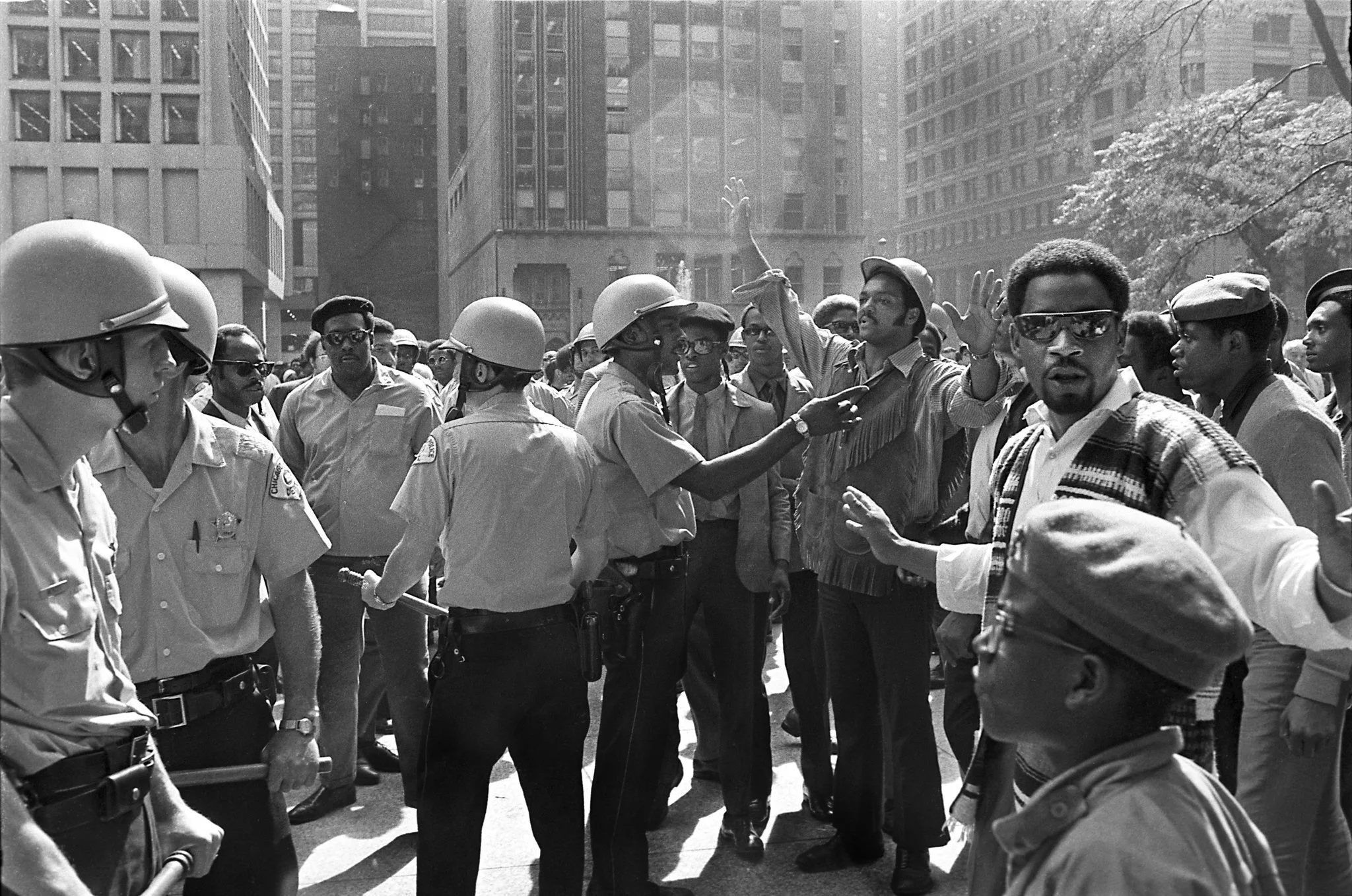
On Sept 22, 1969, then 27-year-old Jesse Jackson led a rally of 4,000 people in Chicago, calling for an end to discrimination in the construction trades. (Gary Settle/The New York Times)
The labor movement lost one of its most unwavering allies with the passing of Rev. Jesse L. Jackson, the civil rights leader whose life’s work spanned movements, generations, and causes. Jackson died on February 17, 2026, at age 84, leaving behind a legacy rooted in justice, dignity, and economic opportunity for all. His family remembered him as a servant leader “to the oppressed, the voiceless, and the overlooked around the world.”
While Rev. Jackson is widely recognized for his central role in the civil rights movement and his historic presidential campaigns, a crucial part of his legacy, and one deeply relevant to all unions, is his steadfast support for workers’ rights, economic justice, and the intersection of civil and labor rights.
A Life Built on Lifting People Up
Jackson’s journey began in the segregated South and took him from student activism to the heart of the civil rights movement alongside Dr. Martin Luther King Jr. After King’s assassination, Jackson emerged as a key leader of the movement, expanding its reach and forging a broader conception of justice that included economic rights and worker dignity.
His work with the Southern Christian Leadership Conference’s Operation Breadbasket connected economic justice directly to civil rights. Under his leadership, this program channeled the collective leverage of Black consumers and workers to push corporations and employers to open doors that had long been closed. Through strategic boycotts and negotiations, Jackson and his colleagues secured thousands of job opportunities for African Americans and pressured businesses to diversify their workplaces.
From those roots grew Operation PUSH and, later, the Rainbow/PUSH Coalition — organizations that combined advocacy for racial equality with campaigns for employment, education, and economic inclusion. These efforts bore witness to Jackson’s belief that true justice could not be won without workers having a seat at the table and an equitable chance to prosper.
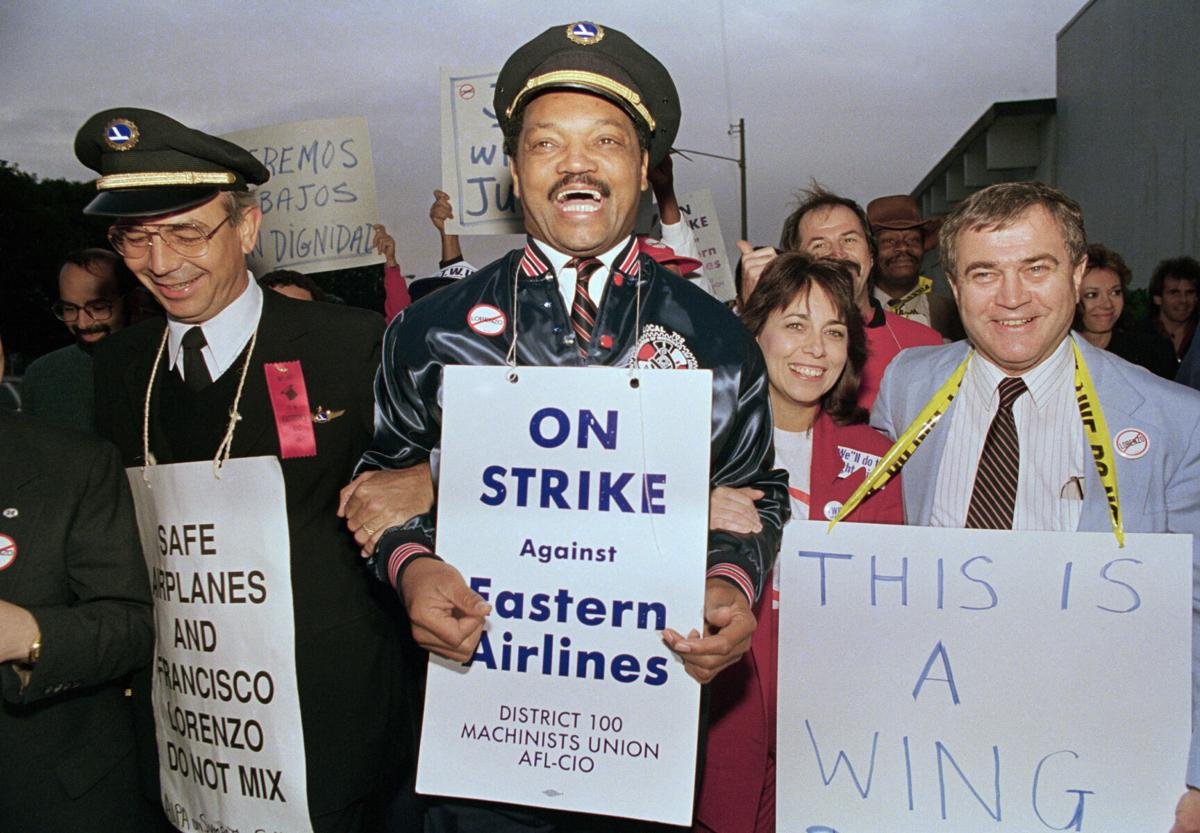
The Rev. Jesse Jackson, center, walks the picket line in Miami on Wednesday, March 9, 1989, with Eastern Airlines Machinists Union District 100 President Charles Bryan, right, and an unidentified pilot, left. Jackson spoke to a Solidarity rally of about 1,000 machinists, pilots and flight attendants at the Machinists’ union headquarters in Miami. (AP Photo/Kathy Willens)
Standing with Workers
Rev. Jackson’s support for labor was not symbolic — it was tangible and consistent. He became known as “someone who has walked more picket lines and spoken at more labor rallies than any other national leader,” working directly with unions to organize workers, protect their rights, and mediate disputes.
Whether lending his voice to striking workers or condemning practices that undermined worker dignity, Jackson saw the struggles of labor and civil rights as inseparable. He understood that discrimination in employment, unequal access to economic opportunity, and the suppression of collective bargaining rights were not isolated problems, but manifestations of the same systemic barriers that denied communities of color a fair chance.
For public employees and union members — whose work keeps our communities safe, educated, healthy, and thriving — Jackson’s message resonates still: economic justice is a civil right, and collective power is essential to securing it.
The Rainbow Coalition and Economic Justice
Jackson’s 1984 and 1988 presidential campaigns expanded on the idea of a “Rainbow Coalition” — bringing together workers, communities of color, women, LGBTQ+ Americans, young people, and others traditionally marginalized in national politics. This coalition wasn’t merely a political strategy; it was a recognition that broad social progress depends on uniting diverse constituencies around shared economic and social goals.
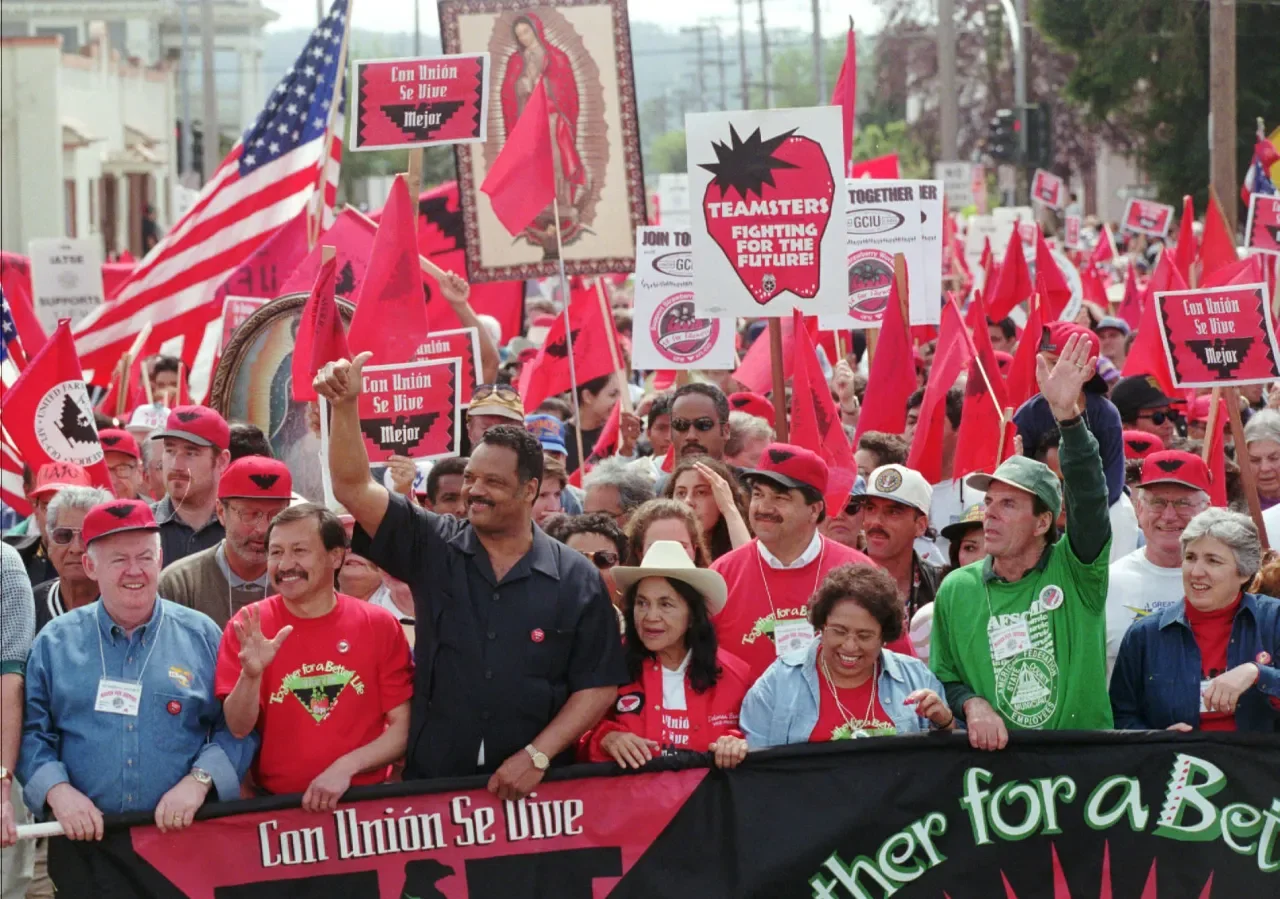
Leading the pack of thousands of United Farm Workers supporters Sunday, April 13, 1997, in Watsonville, CA are, left to right, AFL-CIO President John Sweeney, UFW President Arturo Rodgriguez, The Rev. Jesse Jackson, UFW Secretary-Treasurer Dolores Huerta and AFL-CIO Executive Vice President Linda Chavez-Thomspson. (AP Photo/Sam Morris)
Through this lens, Jackson helped broaden the national conversation about economic inequality, advocating for policies that would improve job opportunities, workplace fairness, and access to education and health care. His tireless efforts helped shift the broader progressive agenda toward issues that matter deeply to working people — including labor rights.
What His Legacy Means to Us Today
As a labor union, we honor Rev. Jackson not just for the civil rights victories he championed, but for the way he embedded labor and economic justice into the broader struggle for a more equitable America. His life’s work reminds us that:
Workers’ rights are civil rights. Advocacy for fair wages, safe workplaces, and collective bargaining is part of the same struggle for dignity that Rev. Jackson fought for his entire life.
Economic power strengthens communities. Jackson understood that without access to jobs and economic opportunity, communities could not thrive and demands for justice would remain incomplete.
Solidarity matters. Whether in the South’s freedom marches or on the picket lines in Chicago, Jackson stood with those whose voices were too often ignored — just as unions stand with workers today.
Rev. Jackson’s impact was not limited only to his role in advancing civil rights, but extended beyond, in the way he consistently connected those struggles to the everyday realities of working people. He understood that fair wages, safe working conditions, and a voice on the job are about more than economics — they are about respect and dignity. His work reminds us that when workers are treated fairly and given the opportunity to stand together, entire communities are stronger as a result.
Rev. Jackson’s life reminds us that progress has never been automatic. It has always depended on people willing to speak up, stay engaged, and stand alongside one another — even when doing so was difficult. That same principle is reflected every day in public service. Public employees show up for their communities, take responsibility for essential work, and rely on one another to meet the needs of the people they serve. By continuing to focus on fairness, mutual respect, and shared responsibility, we strengthen not only our workplaces, but the communities that depend on them.

Emily Landis
Executive Director