
Every March, St. Patrick’s Day arrives wrapped in green with music, festivities, and festive beverages. It is a day associated with community and Irish heritage. But in the United States, St. Patrick’s Day also carries a quieter piece of history, one closely tied to workers, labor organizing, and solidarity.
In the mid-19th century, millions of Irish immigrants arrived in the United States, many fleeing famine, poverty, and political instability. What they encountered here was opportunity mixed with hardship. Irish immigrants often found employment in some of the most difficult and dangerous jobs available: building railroads, digging canals, maintaining cities, working docks, and performing the public works that allowed growing American cities to function. They were essential workers long before the phrase existed.
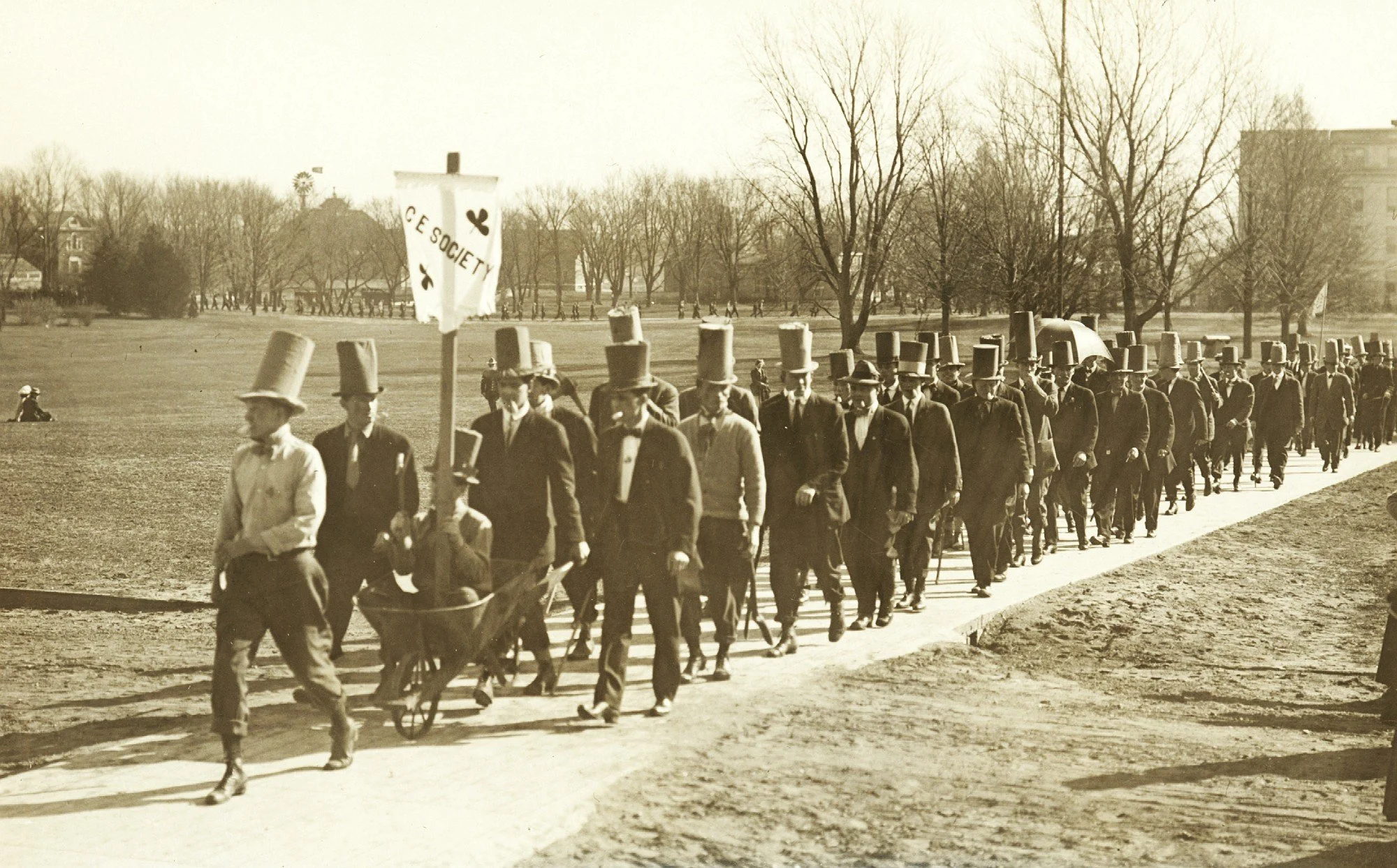
Civil engineers and engineering students march for St. Patrick’s Day at Iowa State College in 1910.
While the work was essential, the conditions were harsh, unsafe, and poorly paid. Individual workers had little to no protection, and even less influence over wages, safety, hours, or working conditions.
Out of necessity, workers turned toward each other, becoming deeply involved in the early American labor movement, not because of ideology, but because collective action offered survival and dignity.
Workers learned that when they stood together, they could demand safer workplaces, fairer pay, and respect on the job. Mutual aid societies, trade associations, and early unions grew from immigrant neighborhoods where cooperation was a practical solution to shared challenges.
St. Patrick’s Day celebrations in American cities soon reflected this reality. Parades were not only cultural events; they were public expressions of belonging. Firefighters, transit workers, laborers, construction trades, municipal employees, and working families marched together, proudly visible in communities where they had initially struggled to find acceptance. The holiday became a moment when workers claimed space in civic life and affirmed that they were part of the American story.
Over time, the holiday grew into something uniquely American, a celebration not just of Irish identity, but of perseverance and community. The same spirit that encouraged immigrants to build new lives also encouraged workers to look out for one another. That spirit remains familiar today in workplaces where collaboration, representation, and shared responsibility continue to matter.
St. Patrick’s Day reminds us that many of the workplace standards we now take for granted were shaped by ordinary workers who believed their voices were stronger together than apart. The holiday’s joyful, communal energy reflects a simple truth: working people have always helped build our communities and institutions. That is why St. Patrick’s Day resonates beyond Irish ancestry. Its American history reflects something universal: people building community in unfamiliar places, supporting one another through hardship, and improving workplaces not only for themselves but for those who would follow.
Celebrating St. Patrick’s Day, then, is not only about heritage. It is a day for gathering friends, sharing food and music, and, just maybe, learning a bit more about the history behind the traditions. Between the festivities and the fun, it offers a small opportunity to remember the workers whose determination helped shape the American workplace along the way.
So, as the green decorations come out, celebrations begin, and green beverages flow, it is worth appreciating both parts of the holiday. St. Patrick’s Day honors heritage, yes, but it also quietly honors solidarity, resilience, and the dignity of work. However you celebrate this year, enjoy the day and take pride in the shared history of working people who helped build the path forward for generations to come.

Jennifer Tate
Labor Representative